
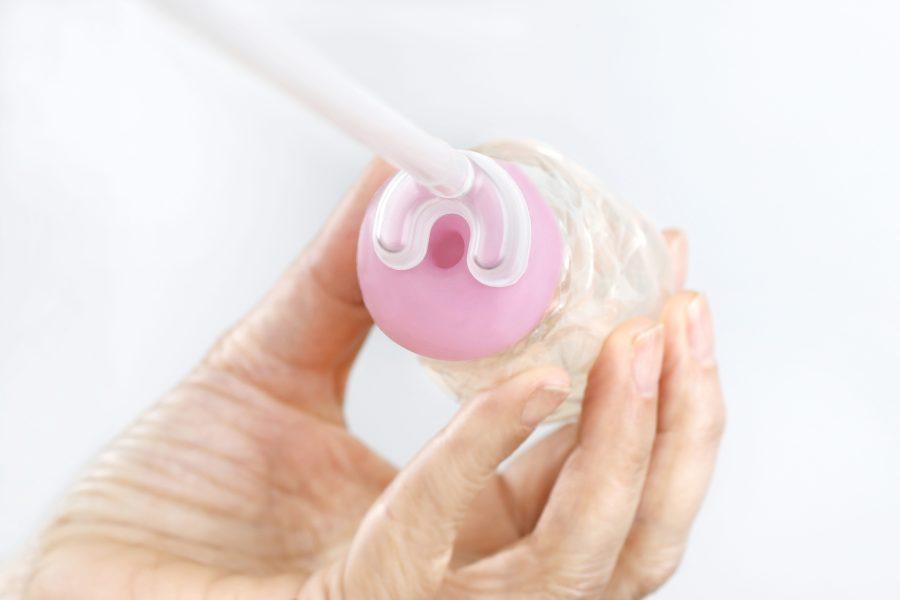

As a woman, just looking a tenaculum is enough to give me the heebie-jeebies. As a gynaecologist and obstetrician, David Finci had always felt uncomfortable using the instrument, a century-old tool initially used to extract bullets from soldiers, for procedures like IUD placement (he performs this procedure around twice a week). He asked his brother, engineer Julien Finci, to devise an improved solution. This is how the Aspivix start-up was born.
Julien, you are a microengineer by trade – how did you find yourself working in Femtech?
It wasn’t by chance. I come from a family of physicians; both my father and brother are gynaecologists. I already had experience in the medical device industry too. In my previous role, I developed light-based sensors that estimate blood CO₂ levels through the skin. This tool allows you to continuously monitor breathing without needing to take blood.
This is where I started to get a taste for entrepreneurship too. However, developing an innovative product and seeking investment as part of a bigger company came with constraints.
That’s when I asked my brother how I could apply my engineering knowledge in the field of women’s health. He shared how uncomfortable he felt each time a procedure required the tenaculum.
For those fortunate enough not to know, can you explain what a cervical tenaculum is?
Of course – the tenaculum is a surgical instrument commonly used in gynaecology. It looks like a pair of scissors with sharp-pointed hooks at the end, so that users can grasp tissues like the cervix (the entrance of the uterus).
The tenaculum is used to stabilise the anatomical and natural angle of the uterus when a gynaecologist needs to place an IUD or take a sample (endometrial biopsy).
From this description alone, it’s already clear that there is a risk of pain and bleeding. Since the tenaculum was invented over a century ago, there hasn’t been much change in the device.
How did you conceive of the carevix® replacement device?
One inspiration was the vacuum pumps used to assist foetal delivery. Based on this, we decided on a device that would use suction to hold the cervix in place. We also knew we wanted the smile shape with a soft lip at the end of the device, for a more comfortable experience. And then it was a matter of iterative testing until we arrived at the final product.
It was a real triumph to see the results of the multicentre randomised controlled trial, conducted at the renowned university hospital of Geneva (HUG) and Lausanne (CHUV) (available on our Resources page).
The trial compared pain and bleeding at different stages of insertion, confirming that, “… significant reductions in pain during the IUD insertion procedure compared with standard single-tooth tenaculum use, particularly among nulliparous women [women who haven’t yet given birth to a child].”
I love how you use a balloon or a tomato to show how the device works. Anyone can easily understand the difference it makes. Can you share where the device is now available?
Of course. carevix® is currently FDA-Cleared for the US market, CE-Marked for the EU and authorised in the UK and Brazil. More countries will come.
carevix® can replace the traditional tenaculum in 82% of IUD insertions. However, it’s not enough to just know this. We remain focused on bringing the device to even more women, and making sure clinicians feel equipped with the right training and information.
Watch how carevix® eases IUD insertion here.
Next time, we’re speaking to Julien about fundraising and how he approaches pitching a suction-based cervical stabilisation device to a predominantly male investor audience. It’ll be out next Thursday!
In the meantime, read our first newsletter about Julien, Celebrating an unsung hero, here.

